Microbiome and IBD: Crohn’s, Colitis, and Gut Research
Inflammatory bowel disease, or IBD, includes Crohn’s disease and ulcerative colitis. Many people with IBD have changes in gut microbes. But a consumer stool test cannot diagnose IBD.
IBD causes long-term gut swelling. Genes and immune reactions can matter. Diet, medicines, the environment, and gut microbes may matter too.
Answer first: gut microbes are an important part of IBD research. IBD is diagnosed with medical care and medical tests, not a consumer stool score.
What Is Inflammatory Bowel Disease?
IBD is a group of long-term gut diseases that cause inflammation. The two main forms are Crohn’s disease and ulcerative colitis.
Crohn’s Disease
Crohn’s disease causes long-term inflammation. It can affect different parts of the digestive tract.
Ulcerative Colitis
Ulcerative colitis causes inflammation and sores in the lining of the large intestine.
Inflammation Matters
IBD is not a functional bowel disorder. Doctors can find inflammation or tissue damage.
IBD and IBS Are Different Conditions
| Question | IBD | IBS |
|---|---|---|
| Main condition | Long-term inflammatory disease. | Gut-brain disorder. |
| Examples | Crohn’s disease and ulcerative colitis. | IBS-C, IBS-D, and IBS-M. |
| Inflammatory damage | Medical tests can show inflammation. | IBS does not cause the same visible injury. |
| How diagnosis is made | History, exam, lab tests, scopes, small tissue samples, and scans as needed. | Symptoms, history, exam, and tests when needed. |
How Do Gut Microbes Differ in IBD?
Human studies often find fewer kinds of gut microbes in IBD. They also find changes in some microbes and what they do.
One large study followed people with Crohn’s disease, ulcerative colitis, and people without IBD for one year. It found broad changes in the body and gut microbes.
Other studies found that gut microbes in IBD can change more over time than in people without the disease.
These findings describe groups, not one test pattern. Two people with IBD can have very different stool results.
Does Dysbiosis Cause IBD?
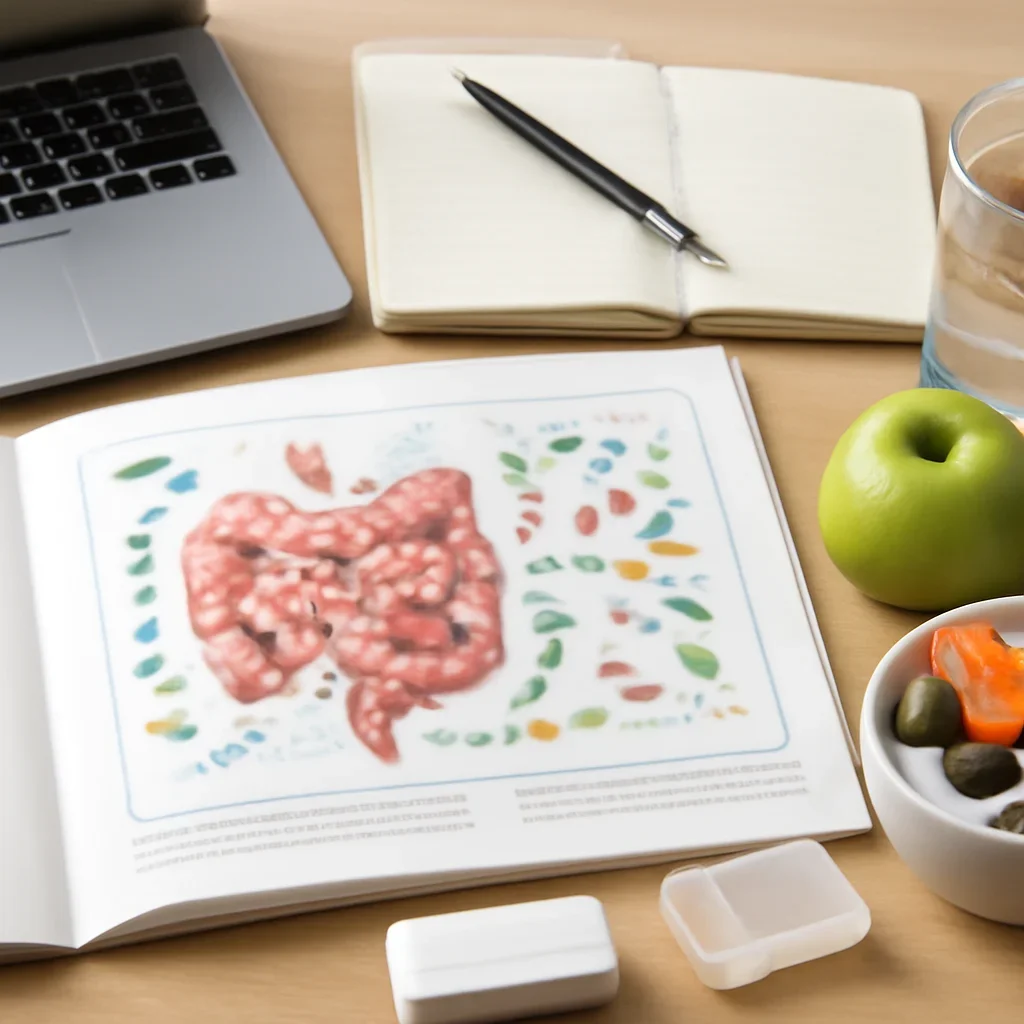
Researchers use the word dysbiosis for a changed mix of gut microbes. Dysbiosis is common in IBD studies. It does not prove cause by itself.
Inflammation can change oxygen, food, mucus, immune signals, and gut movement. These changes can reshape gut microbes.
Medicines, surgery, diet, where the disease is, and how active the disease is can also change stool results. So cause and effect can run both ways.
Gut Microbe Patterns Can Differ by IBD Type
Crohn’s disease and ulcerative colitis share some gut-microbe changes. But they are not the same disease.
Studies find differences by disease type and location. Surgery, inflammation, and medicines can matter too.
Crohn’s in the small bowel, Crohn’s in the colon, and ulcerative colitis can show different patterns. One “healthy vs unhealthy” score can hide those differences.
Why Disease Activity Changes Stool Results
Inflammation
Active inflammation changes the gut setting.
Treatment
Antibiotics and other medicines can change gut microbes.
Diet and Intake
Flares can change what a person eats.
Bowel Changes
Diarrhea, surgery, and bowel speed can change the sample.
Some studies still find gut-microbe differences when IBD is quiet. That does not mean a stool result can predict the next flare.
How Are Crohn’s Disease and Colitis Diagnosed?
Doctors use symptoms, health history, an exam, and medical tests.
NIDDK says Crohn’s evaluation may include blood and stool tests, scopes, small tissue samples, and imaging.
Ulcerative colitis evaluation may include blood and stool tests plus a scope of the large intestine with small tissue samples.
A consumer stool report is not the medical test used to check inflammation, rule out infection, or diagnose IBD.
What Can a Consumer Stool Test Show?
A consumer stool report may show microbes in the sample. It may also show amount, variety, or educational notes.
It does not show the full depth or place of inflammation. It also cannot show ulcers, narrowing, fistulas, tissue changes, or how severe IBD is.
Review the microbiome testing limitations before using a stool result to make a wellness decision.
Test Method Changes What a Report Shows
Stool results depend on the test method. Marker-gene, shotgun, RNA, and other methods show different things.
The microbiome sequencing technology guide explains how method can change detail and function data.
The microbiome glossary can help with terms such as dysbiosis, abundance, variety, genus, species, and strain.
Sources Used for This Article
NIDDK: Crohn’s Disease
Used for Crohn’s symptoms, possible causes, microbiome context, and diagnostic testing.
Review NIDDK Crohn’s guidanceNIDDK: Ulcerative Colitis
Used for ulcerative colitis, inflammation, microbiome context, and diagnostic testing.
Review NIDDK colitis guidanceLloyd-Price et al., 2019
Integrative Human Microbiome Project study of host and microbe activity over time in IBD.
Review the IBD multi-omics studyHalfvarson et al., 2017
Long-term human study showing greater microbiome instability in several IBD groups.
Review the microbiome-dynamics studyPisani et al., 2022
Human remission study showing microbiome differences can remain even outside an active flare.
Review the remission studyWhere At-Home Testing Fits
An at-home stool test can give wellness information about gut microbes. It does not diagnose or monitor IBD.
If you are considering testing, review the current gut microbiome test page and read its stated scope before ordering.
Read microbiome test results in context. Do not treat one microbe, ratio, or variety score as proof of Crohn’s disease or ulcerative colitis.
Frequently Asked Questions
Clear answers about Crohn’s disease, ulcerative colitis, inflammation, dysbiosis, and stool testing.
What Is the Difference Between IBD and IBS?
IBD includes Crohn’s disease and ulcerative colitis. It causes long-term inflammation. IBS is a different gut-brain disorder.
Does the Gut Microbiome Cause IBD?
It may play a role, but IBD does not have one proven microbe cause.
Are Crohn’s Disease and Ulcerative Colitis Microbiomes the Same?
No. Studies find differences by disease type and location. Inflammation and treatment also change results.
Can Inflammation Change the Microbiome?
Yes. Inflammation changes the gut setting and can reshape gut microbes.
Can a Stool Microbiome Test Measure IBD Inflammation?
No. Consumer stool testing is not a medical inflammation test.
Can a Consumer Microbiome Test Diagnose Crohn’s Disease or Ulcerative Colitis?
No. It cannot diagnose, rule out, stage, or monitor IBD.
IBD Is More Than a Stool Pattern
Gut microbes are an important research area. Genes, immune reactions, inflammation, where the disease is, medicines, diet, and other factors also matter.
This article is educational. It does not diagnose, prevent, treat, or cure disease.