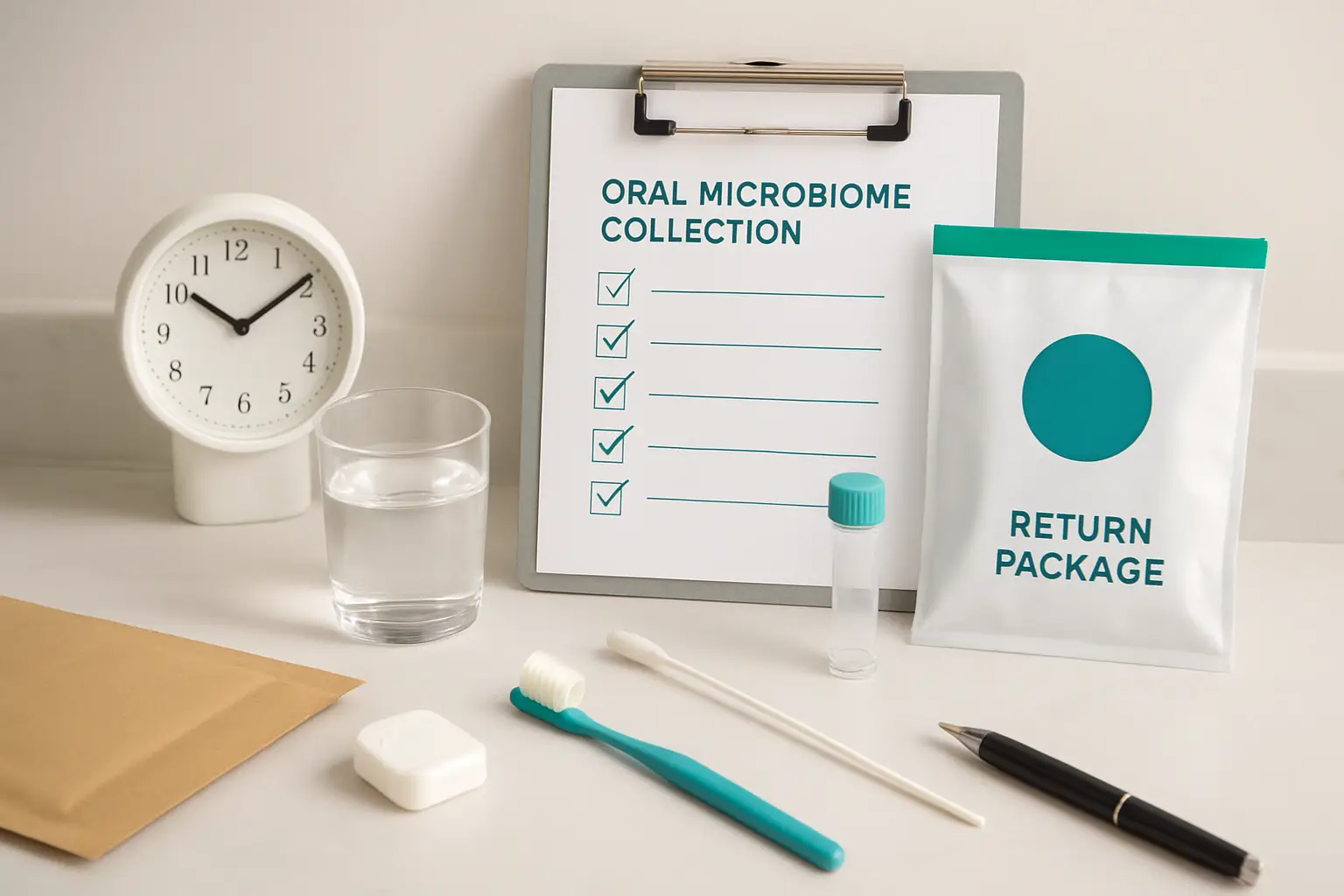
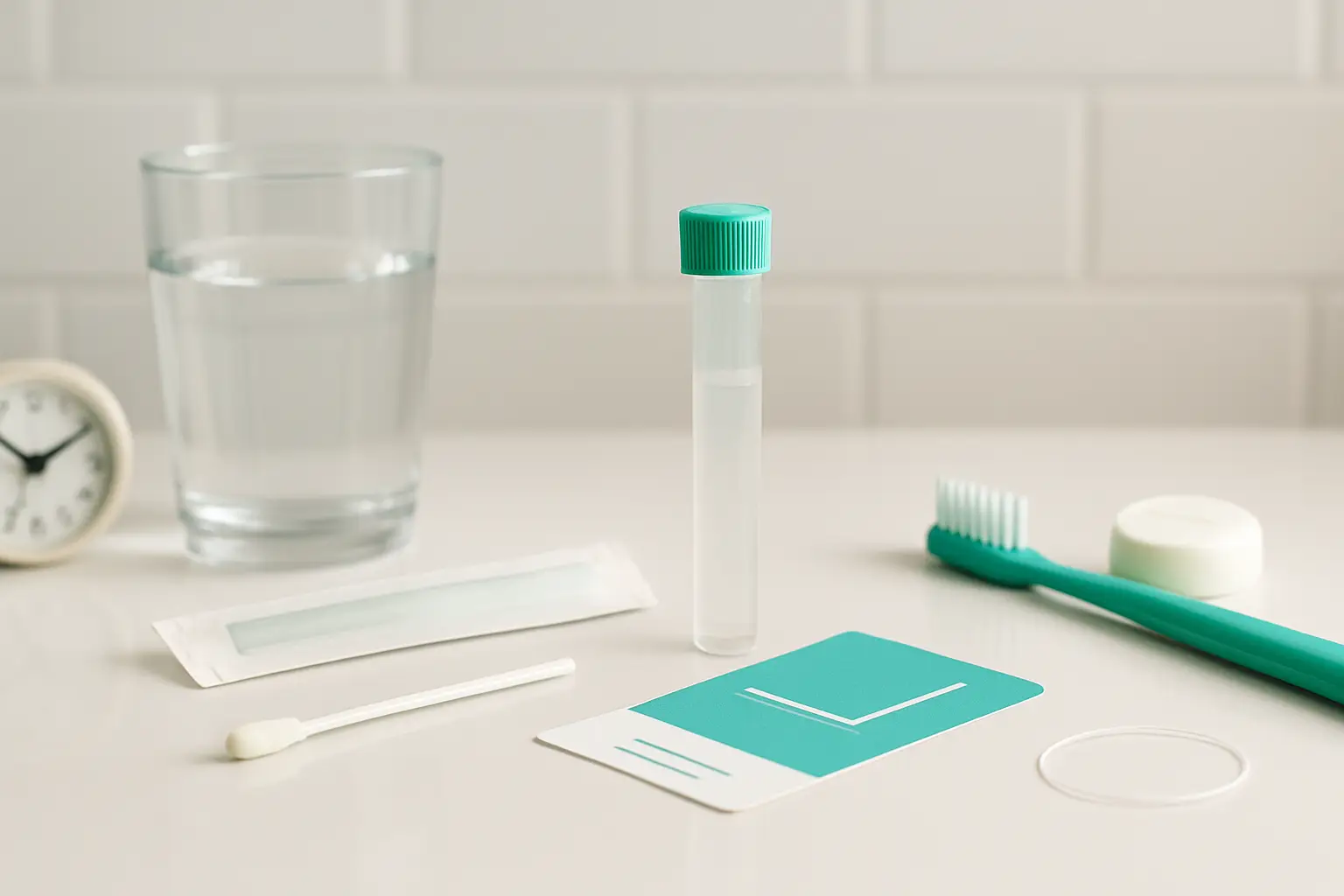
Follow the collection instructions supplied with your oral microbiome kit. Do not assume that brushing immediately before collection is harmless, because oral sampling studies have found that collection time and recent brushing can change measured microbial profiles. If the instructions do not answer your situation, contact support before collecting. For a future comparison, use the same time of day and the same pre-sample routine whenever possible.
The question “Should I take an oral microbiome test before or after brushing?” sounds simple, but it contains two different goals. One person may want a sample that reflects the mouth after an ordinary overnight period. Another may want to repeat a previous test under matching conditions. In both cases, consistency matters more than trying to create a result that looks healthier.
The live Oral Microbiome Test uses an at-home oral sample and provides a focused oral microbiome report. The product is intended for information gathering and follow-up discussions, not diagnosis.
Do not change dental care to improve the result
Keep following dental advice and prescribed treatment. Do not stop brushing, flossing, medication, or a dentist-recommended rinse simply to obtain a different microbiome profile. When a dental procedure or prescribed product conflicts with the kit schedule, dental care takes priority.
Why oral microbiome test timing matters
The mouth changes throughout the day
Saliva flow, meals, beverages, toothbrushing, tongue cleaning, flossing, and oral-care products all affect what is present in a sample at a particular moment. The oral microbiome is not a fixed inventory. An at-home test captures one sample under one set of conditions.
Brushing can alter the immediate sample
A study comparing oral samples collected at different times found that samples taken immediately after brushing differed from samples obtained after waking or after eating. That does not mean brushing is harmful. It means recent cleaning can become part of what the test measures.
The collection method also matters
Saliva, tongue, plaque, and other oral sites do not contain identical microbial communities. Use only the sample site and materials listed in the kit. Do not replace a swab with saliva, scrape a different area, or collect extra material because it seems more complete.
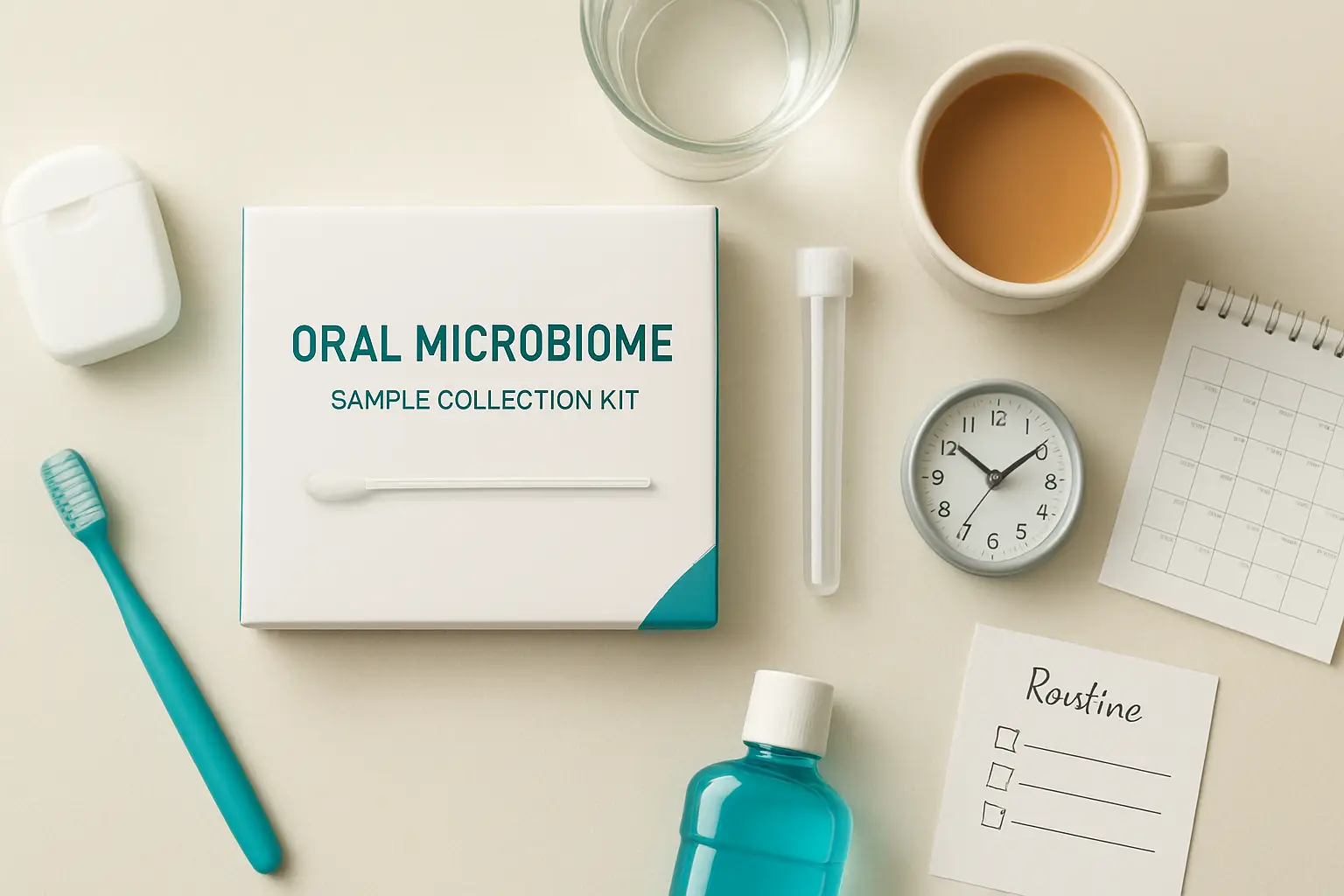
A practical brushing and collection plan
Read the instructions before choosing a morning
Check whether the current kit specifies fasting, a waiting period after food or drink, restrictions on brushing or mouthwash, and a preferred time of day. Complete the sample only when you can follow those directions without rushing.
Do not invent a universal waiting period
Different oral tests may use different sample types and laboratory methods. A wait time copied from another company, a dental test, or a research paper may not apply to your kit. When the instructions are unclear, use the contact page before opening the collection materials.
Match conditions when you repeat the test
If you plan to compare two oral microbiome reports, keep the routine as similar as reasonably possible. Collect at a similar time, follow the same rules around brushing and meals, and record major changes in oral care, medication, dental treatment, smoking or vaping status, and illness. A difference between reports does not prove that one product or habit caused the change.
| Recent event | Why it may matter | What to do |
|---|---|---|
| Toothbrushing or tongue cleaning | Can remove or redistribute material immediately before sampling | Follow the kit’s required interval and record the last cleaning time |
| Food, coffee, or another drink | May change saliva flow and introduce short-term residues | Use the kit’s food-and-drink instructions rather than guessing |
| Antiseptic or prescription mouthwash | Some rinses can change oral bacterial abundance and community measures | Do not stop prescribed use; ask support how to time the sample |
| Dental cleaning or treatment | Professional plaque removal and treatment may change the sampling context | Record the procedure and confirm timing before collecting |
What about mouthwash before an oral microbiome test?
Mouthwash is not one uniform product category. Cosmetic rinses, fluoride rinses, essential-oil products, and prescription chlorhexidine have different ingredients and purposes. Clinical studies have shown that sustained antiseptic mouthwash use can change measured oral microbial communities.
Do not skip a prescribed rinse without asking the dentist or clinician who recommended it. Instead, tell the test provider which product you use, how often you use it, and when the last dose will occur relative to collection. That information may affect whether you should collect now or choose a later date.
Can you test after a dental cleaning?
A professional cleaning removes plaque and deposits from tooth surfaces and around the gumline. That may make the immediate post-cleaning sample different from your usual routine. There is no universal consumer testing rule that applies to every cleaning and every oral microbiome kit.
When a baseline is the goal
Ask whether the provider recommends collecting before the appointment or waiting until your ordinary oral-care routine has resumed. Do not delay necessary dental care for a wellness test.
When tracking dental treatment is the goal
A before-and-after plan should be designed in advance. Record the type of dental care, collection dates, oral-care products, and any medication. The report can document differences between two samples, but it cannot prove that the dental treatment caused every change.
Oral microbiome sample checklist
Before collection
- Confirm the correct swab or collection device.
- Read rules for brushing, food, drinks, and mouthwash.
- Check whether recent dental work affects timing.
- Confirm the return address and shipping plan.
Record for context
- Collection date and local time.
- Last meal, drink, brushing, flossing, and rinse.
- Recent antibiotics or prescribed oral products.
- Dental cleaning, procedure, or new symptoms.
U.S. timing and return-shipping reality
Sample timing also needs to fit the return route. A kit collected late on Friday may spend extra time waiting for a carrier pickup, especially before a federal holiday or during regional weather disruptions. Check the current U.S. shipping guidance and the return instructions before choosing the collection day.
Customers in Alaska, Hawaii, rural areas, tribal communities, islands, and places served by limited carrier schedules may need more planning than customers near a major sorting hub. Do not change sample storage or add your own temperature-control materials unless the kit authorizes them.
When an oral microbiome test is not the next step
A wellness report should not delay a dental examination. Seek timely professional care for persistent pain, swelling, unexplained bleeding, a mouth sore that does not heal, difficulty swallowing, fever, trauma, or rapidly worsening symptoms. A dentist can examine teeth, gums, oral tissues, bite, and imaging needs in ways a microbiome report cannot.
Sources and editorial basis
- Yamashita Y, et al. Comparative evaluation of oral microbial profiles obtained at different collection time points and by different methods. PubMed record.
- Bescos R, et al. Effects of chlorhexidine mouthwash on the oral microbiome. Scientific Reports, 2020. PubMed record.
- Min K, et al. Effects of brushing, flossing, and mouthrinsing on plaque microbiota: a 12-week clinical trial. BMC Oral Health, 2024. PubMed record.
Editorial scope: consumer collection timing and test limitations. This article does not provide dental diagnosis or treatment advice.